Pollution
Introduction of contaminants into the natural environment that cause adverse change.Pollution can take the form of chemical substances or energy, such as noise, heat or light. Pollutants, the components of pollution, can be either foreign substances/energies or naturally occurring contaminants. Pollution is often classed as point source or nonpoint source pollution.
Water pollution
Contamination of water bodies. Water pollution occurs when pollutants are directly or indirectly discharged into water bodies without adequate treatment to remove harmful compounds.
Water pollution affects plants and organisms living in these bodies of water. In almost all cases the effect is damaging not only to individual species and populations, but also to the natural biological communities.
Air pollution
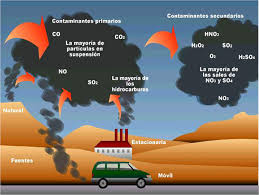
Introduction of chemicals, particulates, biological materials, or other harmful materials into the Earth's atmosphere, possibly causing disease, death to humans, damage to other living organisms such as food crops, or the natural orbuilt environment.
The atmosphere is a complex natural gaseous system that is essential to support life on planet Earth. Stratospheric ozone depletion due to air pollution has long been recognized as a threat to human health as well as to the Earth's ecosystems.
 |
Indoor air pollution and urban air quality are listed as two of the world’s worst toxic pollution problems in the 2008 Blacksmith Institute World's Worst Polluted Places report.
A reservoir is a natural or artificial lake, storage pond or impoundmentfrom a dam which is used to store water. Reservoirs may be created in river valleys by the construction of a dam or may be built by excavation in the ground or by conventional construction techniques such as brickwork or cast concrete.
The term reservoir may also be used to describe naturally occurring underground reservoirs such as those beneath an oil or water well.
A toxin is a poisonous substance produced within living cells or organisms synthetic substances created by artificial processes are thus excluded. The term was first used by organic chemist Ludwig Brieger.
Toxins can be small molecules, peptides, or proteins that are capable of causing disease on contact with or absorption by body tissues interacting with biological macromolecules such as enzymes or cellular receptors. Toxins vary greatly in their severity, ranging from usually minor and acute to almost immediately deadly .
Waste(s) is a pejorative term for unwanted materials. The term can be described as subjective and inaccurate because waste to one person is not waste to another.

No hay comentarios:
Publicar un comentario